Skip to main content
Australian Timber Database
-
Finance and Expenses
-
Human Resources
-
- Articles coming soon
-
-
Imported Timbers
- Teak Timber: Uses, Properties & Specifications
- Taun Timber: Uses, Properties & Specifications
- Rubberwood Timber: Uses, Properties & Specifications
- Rose mahogany Timber: Uses, Properties & Specifications
- Red balau Timber: Uses, Properties & Specifications
- Ramin Timber: Uses, Properties & Specifications
-
- White cypress Timber: Uses, Properties & Specifications
- Western red cedar Timber: Uses, Properties & Specifications
- Slash pine Timber: Uses, Properties & Specifications
- Radiata pine Timber: Uses, Properties & Specifications
-
-
- Blush alder Timber: Uses, Properties & Specifications
- Bollywood Timber: Uses, Properties & Specifications
- Brigalow Timber: Uses, Properties & Specifications
- Brown quandong Timber: Uses, Properties & Specifications
- Brown salwood Timber: Uses, Properties & Specifications
- Brush box Timber: Uses, Properties & Specifications
- Bunya pine Timber: Uses, Properties & Specifications
- Calantas Timber: Uses, Properties & Specifications
- Calophyllum Timber: Uses, Properties & Specifications
- Carbeen Timber: Uses, Properties & Specifications
- Caribbean pine Timber: Uses, Properties & Specifications
- Chengal Timber: Uses, Properties & Specifications
- Coachwood Timber: Uses, Properties & Specifications
- Damson Timber: Uses, Properties & Specifications
- Douglas fir Timber: Uses, Properties & Specifications
- Durian Timber: Uses, Properties & Specifications
- Erima Timber: Uses, Properties & Specifications
- Eungella satinash—red and white Timber: Uses, Properties & Specifications
- Forest red gum Timber: Uses, Properties & Specifications
- Grey box Timber: Uses, Properties & Specifications
- Grey gum Timber: Uses, Properties & Specifications
- Grey ironbark Timber: Uses, Properties & Specifications
- Grey satinash Timber: Uses, Properties & Specifications
- Gympie messmate Timber: Uses, Properties & Specifications
- Hoop pine Timber: Uses, Properties & Specifications
- Jarrah Timber: Uses, Properties & Specifications
- Kapur Timber: Uses, Properties & Specifications
- Kempas Timber: Uses, Properties & Specifications
- Keruing Timber: Uses, Properties & Specifications
- Kwila Timber: Uses, Properties & Specifications
- Meranti Timber: Uses, Properties & Specifications
- Miva mahogany Timber: Uses, Properties & Specifications
- Narrow-leaved red ironbark Timber: Uses, Properties & Specifications
- Northern cypress Timber: Uses, Properties & Specifications
- Northern silky oak Timber: Uses, Properties & Specifications
- Palaquium Timber: Uses, Properties & Specifications
- Pepperwood Timber: Uses, Properties & Specifications
- Queensland maple Timber: Uses, Properties & Specifications
- Queensland walnut Timber: Uses, Properties & Specifications
- Red bloodwood Timber: Uses, Properties & Specifications
- Red cedar Timber: Uses, Properties & Specifications
- Red mahogany Timber: Uses, Properties & Specifications
- Red siris Timber: Uses, Properties & Specifications
- Rose gum Timber: Uses, Properties & Specifications
- Satinay Timber: Uses, Properties & Specifications
- Scentless rosewood Timber: Uses, Properties & Specifications
- Silver ash Timber: Uses, Properties & Specifications
- Silver quandong Timber: Uses, Properties & Specifications
- Silvertop ash Timber: Uses, Properties & Specifications
- Silvertop stringybark Timber: Uses, Properties & Specifications
- Spear wattle Timber: Uses, Properties & Specifications
- Spotted gum Timber: Uses, Properties & Specifications
- Tallowwood Timber: Uses, Properties & Specifications
- Tasmanian oak Timber: Uses, Properties & Specifications
- Tulip oak Timber: Uses, Properties & Specifications
- Tulip plum Timber: Uses, Properties & Specifications
- Turpentine Timber: Uses, Properties & Specifications
- Western white gum Timber: Uses, Properties & Specifications
- White beech Timber: Uses, Properties & Specifications
- White cheesewood Timber: Uses, Properties & Specifications
- White mahogany Timber: Uses, Properties & Specifications
- White stringybark Timber: Uses, Properties & Specifications
- (No title) Timber: Uses, Properties & Specifications
- Show Remaining Articles (48) Collapse Articles
-
-
IT Support
-
- Articles coming soon
-
-
Operations and Logistics
-
- Articles coming soon
-
-
Professional Development
-
Sales and Marketing
Scientific name
Swietenia mahogoni, S. macrophylla. Family: Meliaceae
Other names
Cuban mahogany; Spanish mahogany; Honduras mahogany; West-Indian mahogany; caoba (Latin America); acajou (French-speaking areas); mogno, araputanga; aguano (Brazil); zopilote gateado (Mexico)
Description
- Tropical hardwood.
- Grows to 50m high and 2m diameter.
- Bole (trunk) is often 20–40m long.
Original (true) mahogany was exported to Europe in the early 18th century. Since then many timbers have been called mahogany due to similar aesthetics or to increase their market.
Occurrence
Natural distribution
- Central America
- West Indies
- Mexico
- Peru
- Venezuela
- Bolivia
Plantations
- within native range (above)
- Hawaii
- Fiji
- Philippines
Appearance
Colour
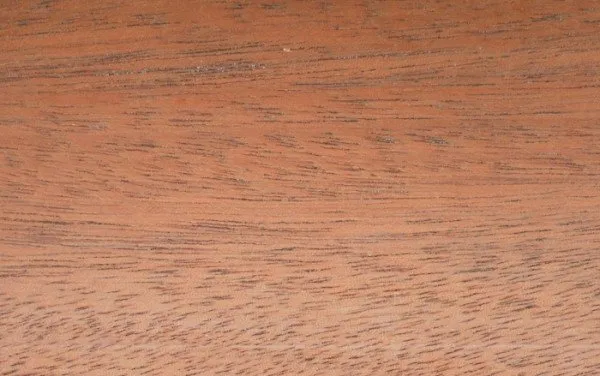
- Sapwood is light pink-yellowish-brown and usually distinct from heartwood.
- Heartwood varies from medium to deep red-brown.
- Timber darkens on exposure.
- Logs may produce streaky timber.
Grain
- Texture is moderately fine.
- Grain is straight to wavy or interlocked, often with an attractive figure (pattern).
Uses
Decorative
- High-quality original and reproduction cabinets and chairs.
- Panelling, interior joinery.
- Vehicle window and door cappings.
- Boat building, deck housing and cabin fittings.
Others
- Boat building, planking, pattern making, models.
Properties
- Density: 530kg/m3 at 12% moisture content; about 1.9m3 of seasoned sawn timber per tonne.
- Strength groups: S5 unseasoned, SD6 seasoned.
- Stress grades: F5, F7, F8, F11 (unseasoned), F7, F8, F11, F14 (seasoned) when visually stress-graded in accordance with AS 2082—2000: Timber—Hardwood—Visually stress-graded for structural purposes.
- Joint groups: JD4 seasoned.
- Shrinkage to 12% MC: 2.5% (tangential), 1.6% (radial).
- Unit shrinkage: 0.21% (tangential), 0.18% (radial)—these values apply to timber reconditioned after seasoning.
- Durability above-ground: Class 3 (life expectancy 7–15 years).
- Durability in-ground: Class 3 (life expectancy 5–15 years).
- Lyctine susceptibility: untreated sapwood susceptible to lyctine borer attack.
- Termite resistance: not resistant.
- Preservation: difficult to impregnate with preservatives.
- Seasoning: dries fairly rapidly without much checking or distortion.
- Hardness: soft (rated 5 on a 6-class scale) to indent and work with hand tools.
- Machining: machines well, but can sometimes produce a woolly finish; maintain sharp cutting edges.
- Fixing: nails and screws well.
- Gluing: good characteristics.
- Finishing: excellent, readily accepts paint, stain and polish.
Research and resources
- Bootle, K 2005, Wood in Australia: Types, properties and uses, 2nd ed., McGraw-Hill, Sydney.
- Ilic, J 1991, CSIRO atlas of hardwoods, Crawford House Press, Bathurst, Australia.
- Queensland Government, DAF 2018, Construction timbers in Queensland: properties and specifications for satisfactory performance of construction timbers in Queensland. Class 1 and Class 10 buildings, Books 1 & 2, Department of Agriculture and Fisheries, Brisbane.